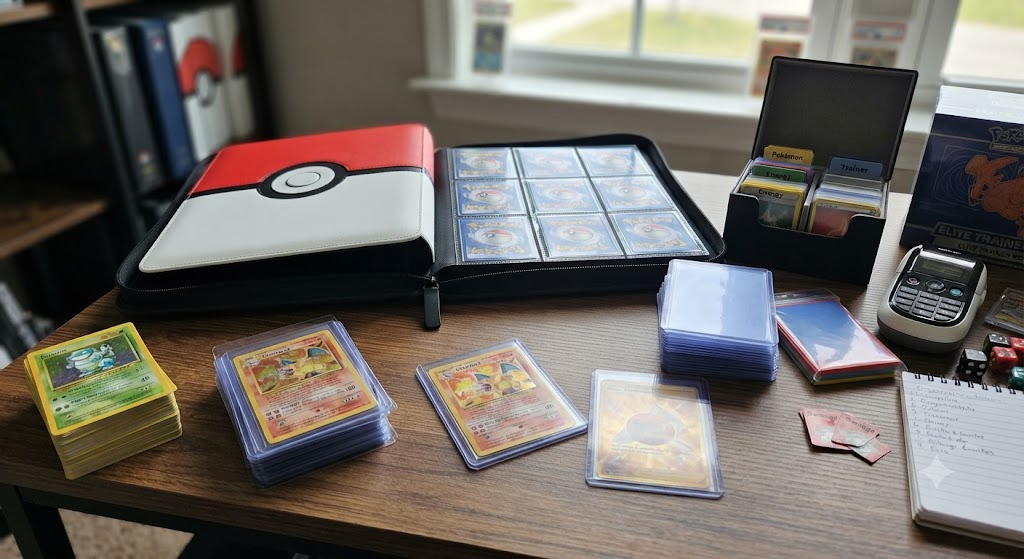
Your Pokémon card is only worth what its condition allows. A PSA 10 Charizard and a PSA 7 of the same card can be separated by thousands of euros in value. The difference between them is often just storage. Card degradation from improper handling, cheap materials, or poor environmental control is the single biggest silent destroyer of collection value.
Whether you're protecting a €500 vintage pull or organizing 500 modern commons, the storage system you choose matters. The good news: getting it right doesn't require a huge budget. A few euros spent on the right sleeves and a proper binder can preserve thousands in card value over the long term.
This guide covers everything from the basics of sleeve selection to grading submission prep. We'll cover product recommendations with real prices, when to use each storage method, and the mistakes we see new collectors make constantly. If you're serious about your collection's condition and its future resale value, this is where to start.
Sleeves: Your First Line of Defense
Any card you care about should be in a sleeve the moment it leaves the pack. Oils from your fingers, surface scratches, and edge dings do their damage in the first days. A sleeve costs €0.03–€0.15 per card. The card it protects might be worth €10–€500.
Penny Sleeves vs. Premium Sleeves
| Feature | Penny Sleeves | Premium Sleeves (KMC Perfect Fit, Dragon Shield) |
|---|---|---|
| Price per unit | €0.02–€0.05 | €0.08–€0.15 |
| Fit | Standard (slightly loose) | Tight, precision fit |
| Acid-free | Sometimes | Always |
| Best for | Bulk cards, temporary protection | Valuable cards, long-term storage |
| Inner sleeve for top loaders | Not ideal | Perfect (KMC Perfect Fit is the standard) |
Penny sleeves are fine for bulk storage and cards you're moving frequently. They're cheap, available everywhere, and good enough for cards in the €0.10–€2 range. Packs of 100 from Amazon card sleeves bulk run €3–€5.
 Ultra Pro Penny Soft Card Sleeves, 1000 Sleeves (10 Packs of 100)Buy on Amazon →
Premium sleeves are what you want for anything with real value. KMC Perfect Fit sleeves are the industry standard for a reason. They fit snugly inside top loaders without adding bulk, and they're archival-grade acid-free. Dragon Shield matte sleeves offer slightly more rigidity and come in colors that help with organization (we'll cover that below).
The rule: If a card is worth more than €5, it goes in a premium sleeve. Period.
Top Loaders: Maximum Physical Protection
Top loaders are rigid plastic holders that shield cards from bending, crushing, and impact damage. They're essential for high-value cards, shipping cards to other collectors, and cards you're submitting for grading.
When to Use a Top Loader
- Cards valued above €20: the minimum threshold where rigid protection makes sense
- Shipping cards: always double-sleeve + top load when mailing to a buyer or trade partner
- Grading submissions: PSA, BGS, and CGC all require cards to arrive in undamaged condition
- Display pieces: magnetic one-touch holders (like Ultra Pro) showcase a card while protecting it
Top Loader Storage Tips
Store top loaders vertically in a sturdy box or bin. Don't stack them horizontally under weight, which can cause warping over time. Label each top loader with a sticky note or marker if you have many cards stored this way. For premium display, magnetic card holders from Ultra Pro offer a clean look with UV protection.
Pro tip: Use a penny sleeve inside the top loader as a buffer, then a KMC Perfect Fit as the inner sleeve. This double-sleeve method prevents the card from sticking to the top loader's plastic, which can cause surface damage when you remove it.
 Ultra Pro 3x4 Clear Regular, Pack of 100 Toploader Thick Card SleevesBuy on Amazon →
Binders: Organizing Your Collection at Scale
Binders are where your collection becomes browsable, organized, and enjoyable to look at. But not all binders are equal, and the wrong choice can actually damage your cards.
9-Pocket vs. 12-Pocket Pages
| Feature | 9-Pocket | 12-Pocket |
|---|---|---|
| Cards per page | 9 | 12 |
| Standard sizing | Universal | Slightly wider pages |
| Best for | Smaller collections, portability | Larger collections, set organization |
| Page availability | Everywhere | More limited |
9-pocket pages are the standard. They fit standard binders, are available from all major manufacturers, and hold cards securely. 12-pocket pages let you fit 33% more cards per page. They earn their keep when you're organizing a complete set and want to minimize page count.
Binder Quality Matters
This is where many collectors make expensive mistakes:
- D-ring binders are dangerous for cards. The metal rings can catch and bend card edges when you turn pages. We've seen collectors lose hundreds of euros to ring damage alone.
- Choose round-ring or ringless (post) binders. Premium binders from Ultra Pro or Dex Protection use post-bound or D-ring-free designs that eliminate this risk entirely.
- Pages should be acid-free and PVC-free. Cheap binder pages contain PVC that off-gasses over time, causing cards to yellow and degrade. Always verify: acid-free, archival-grade, PVC-free.
Recommended products: Ultra Pro Premium 9-Pocket Binders (€15–€25), Dex Protection Hexxstorage Binders (€25–€40 for premium build quality). Browse card binders on Amazon.
 ProCase Toploader Binder, 9 Pocket, Holds 324 Toploaders, BlackBuy on Amazon →
Grading Submission Prep: Store Cards Destined for PSA, BGS, or CGC
If you're submitting cards to PSA, BGS, or CGC for professional grading, storage before submission is critical. The grading companies grade the card's condition, and any damage from improper storage can knock a potential 10 down to an 8, costing you hundreds or thousands of euros in lost value.
Pre-Submission Storage Checklist
- Double-sleeve: KMC Perfect Fit inner sleeve + standard outer sleeve
- Rigid holder: Top loader or semi-rigid card saver (Card Savers are what PSA recommends)
- No bending: Never fold, roll, or stack unprotected cards
- No touching the surface: Handle only by edges and sleeves
- Climate controlled: Store in 18–22°C (65–72°F), 40–50% humidity until submission day
The difference between a PSA 9 and PSA 10 often comes down to centering and surface condition, both of which can be ruined by careless storage. We've analyzed PSA 10 vs raw price differences and the premium for perfect grades is massive.
Climate Control: Protecting Cards from Environmental Damage
Most collectors focus on sleeves and binders but forget that temperature, humidity, and light exposure can destroy cards just as effectively as physical mishandling.
The Ideal Storage Environment
| Factor | Ideal Range | What Happens Outside Range |
|---|---|---|
| Temperature | 18–22°C (65–72°F) | Warping, ink fading, adhesive breakdown |
| Humidity | 40–50% RH | Below 30%: brittle cards, cracked holo foil. Above 60%: mold, warping, sticking pages |
| Light | Minimal UV exposure | Fading, color shifting, holo degradation |
| Air quality | Low dust, no smoke | Surface contamination, staining |
Quick wins: Store cards away from windows. Use silica gel packets in storage boxes. Don't store cards in attics, garages, or basements where temperature swings are extreme. If you live in a humid climate, a small dehumidifier near your collection area makes a real difference.
Proper climate control is the difference between a card that grades PSA 10 in five years and one that grades PSA 7 because the holo foil warped from humidity.
Digital Cataloging: Why Physical Storage Needs a Digital Layer
Physical storage protects the card. Digital tracking protects the information. The best collectors we work with combine both: they store cards properly and track them digitally so they always know what they own, what it's worth, and where it is.
A digital catalog answers questions that physical storage can't:
- What's my collection worth right now? Live Cardmarket prices update daily. You don't have to check each card individually.
- Am I overexposed to one set? Portfolio analysis shows concentration risk across vintage, modern, and graded cards.
- Which cards are missing from a set? Set completion tracking fills the gaps.
- What did I pay vs. what's it worth now? Buy price tracking shows your actual returns.
Our complete beginner's guide covers how to start combining physical and digital organization from day one.
Common Storage Mistakes New Collectors Make
We've seen these errors cost collectors real money. Avoid them from the start:
1. Using Rubber Bands Around Cards
Rubber bands leave impressions on card edges, cause surface damage, and can warp cards over time. Never use them, even temporarily. Use twist ties, card clips, or rubber-band-free storage solutions.
2. Storing Cards in Plastic Sleeves Without Top Loaders for High-Value Cards
A soft sleeve protects against scratches but not bending. For any card worth more than €20, always add a top loader or semi-rigid holder.
3. Keeping Cards Near Windows or Heat Sources
UV light and temperature fluctuations are silent card killers. Direct sunlight can fade a card's colors in weeks. A radiator or heating vent nearby can warp an entire stack.
4. Using D-Ring Binders
We mentioned this above, but it bears repeating: D-ring binders are the most common source of card edge damage in binder collections. Switch to round-ring or post-bound binders.
5. Not Tracking What You Own
You can't protect what you can't see. Without a digital catalog, cards get lost, duplicates pile up, and you miss when a card in your collection has appreciated significantly. Collection management apps solve this problem.
6. Mixing Graded and Raw Cards Without Separation
Graded cards in slabs are bulky and heavy. Storing them loose in a binder box can crack slabs or damage raw cards. Use separate storage for each category.
Storage Product Price Guide
Here's a quick reference for building a complete storage system:
| Product | Price Range (2026) | What to Buy |
|---|---|---|
| Penny sleeves (100 pack) | €3–€5 | Ultra Pro, BCW |
| Premium sleeves (100 pack) | €8–€15 | KMC Perfect Fit, Dragon Shield |
| Top loaders (25 pack) | €5–€10 | Ultra Pro, BCW |
| Magnetic one-touch holders (5 pack) | €10–€20 | Ultra Pro, Pro-Mold |
| 9-pocket binder pages (10 pack) | €5–€10 | Ultra Pro, Dex Protection |
| Premium binder (9-pocket, 360 capacity) | €15–€40 | Ultra Pro Premium, Dex Protection |
| Card savers for grading (25 pack) | €5–€10 | Card Saver, Ultra Pro Semi-Rigid |
A complete starter setup with sleeves, a binder, and top loaders for your best cards costs under €50. That's cheap insurance for a collection worth hundreds or thousands.
📊 Organize your collection digitally with CardTrezor: the free portfolio tracker with live Cardmarket prices. Start tracking free
Affiliate Disclosure: CardTrezor is a participant in the Amazon EU Associates Programme. We earn from qualifying purchases. This article contains affiliate links.
Read Next
- The Beginner's Guide to Pokémon Card Collecting in 2026: Start here if you're new to collecting
- 7 Pokémon Card Collection Tips: Smarter Collecting in 2026: Build a smarter, more organized collection